Personal review
I got the viral Dr. Renú SpectraLift LED Mask—here’s my review
I got the viral Dr. Renú SpectraLift LED Mask and have used it for two months. My skin looks less red and my complexion looks healthier overall. It has also felt less irritated alongside my prescription-retinoid routine.
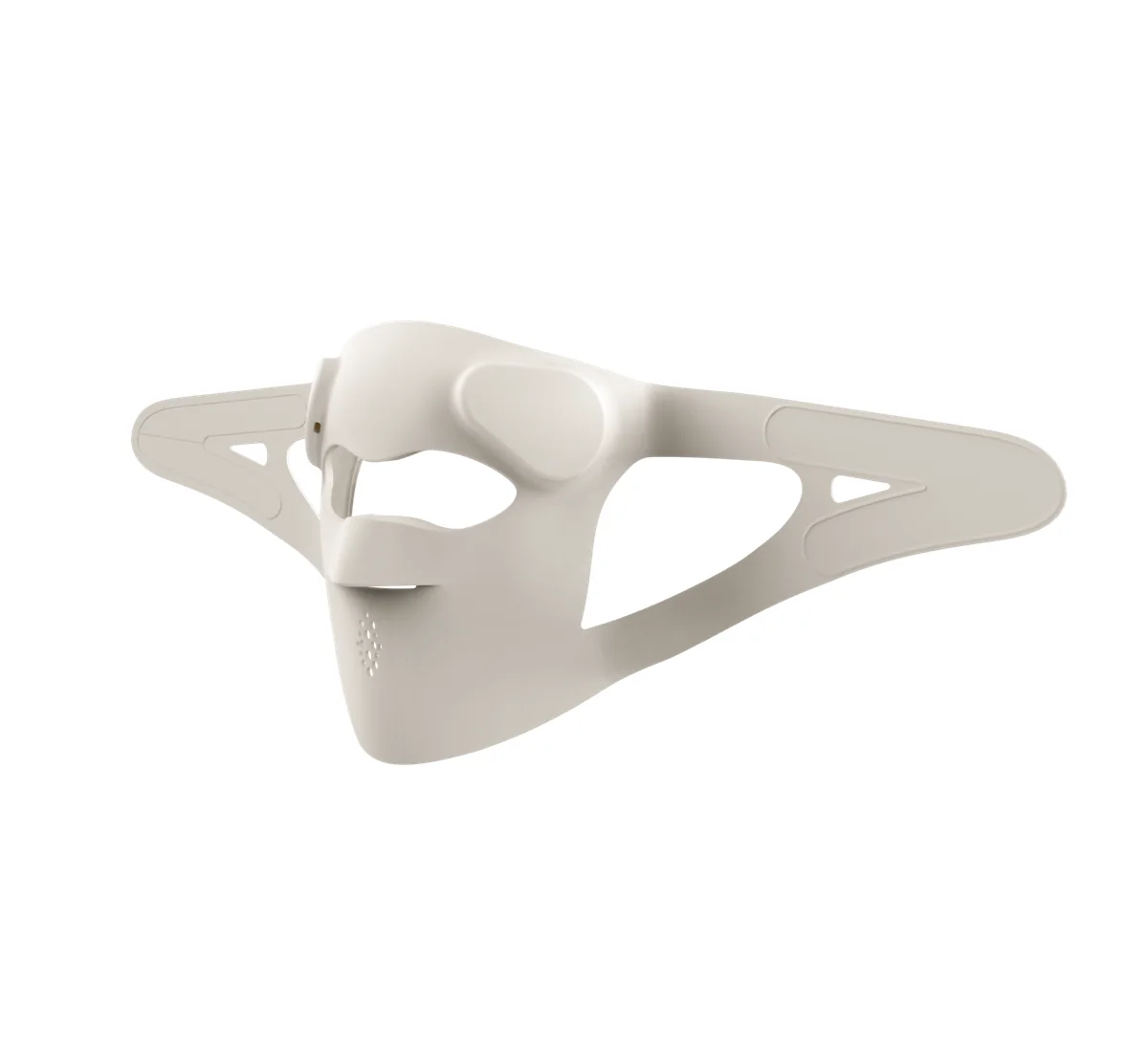
What is it?
I kept seeing the SpectraLift online and eventually decided to try it. It is a cordless face mask with nine modes and red, near-infrared, blue, and green light options. Dr. Renú lists 280 LEDs, USB-C charging, a weight of 300 grams, and light output up to 50 mW/cm².
What I like most is the convenience: I put it on clean skin, choose a mode, and let the timed session run. It feels like a proper beauty ritual without taking over the evening, which is exactly what I wanted from an at-home device.
After two months of regular use, I have noticed less visible redness and a healthier-looking complexion overall. I also use prescription retinoids, and my skin has seemed less irritated since adding the mask to my routine. That is my personal observation, not proof that the mask prevents retinoid irritation; anyone using prescription skincare should check changes to their routine with their prescriber.
It was also reassuring to see SpectraLift leading independent review charts and appearing near the top of several roundups. A ranking cannot promise personal results, but it gave me more confidence in the choice.
Since first publishing this review I have spent more time with the published numbers, because “up to 50 mW/cm²” means something more specific than I first assumed. I used IrradianceLab, a site that collects LED-mask specifications and checks them against manufacturer documents and FDA filings, and it reads that headline as the top of a per-mode range rather than the output of every setting.
The per-mode figures in the manufacturer’s own FDA submission are stated as nominal values with a −10%/+30% tolerance: about 20 mW/cm² for red, 4 mW/cm² for near-infrared, 35 mW/cm² for blue, 35 mW/cm² for red with near-infrared, and 40 mW/cm² for red with blue. A separate manufacturer-run test on an EVERFINE HAAS-1200 spectroradiometer reports 26.9–50.0 mW/cm² across the modes. Both sets of numbers come from the manufacturer rather than an independent laboratory, and IrradianceLab lists its own measurement of this mask as still queued—so this is disclosure, not verification.
The comparison also changed how I read the rest of the category. Omnilux Contour Face and the CurrentBody Skin LED Mask Series 2 both publish around 30 mW/cm² with ten-minute sessions. Dr. Dennis Gross lists 75 mW/cm² for red in its manual, paired with a three-minute session. Therabody and Shark publish no irradiance figure in consumer marketing at all; those numbers exist only inside their FDA submissions. On IrradianceLab’s eight-criterion disclosure scoring, SpectraLift places first with 16 of 19, ahead of Omnilux and CurrentBody at 11. That rubric ranks how much a brand tells you, not how well a mask works, and the site says so plainly.
Two details I had not registered when I bought mine. The FDA clearance behind this mask covers over-the-counter wrinkle reduction and is held by the contract manufacturer rather than by Dr. Renú, which is normal in this category but worth knowing. And the cleared configuration lists red, blue, and infrared; the green mode is not part of it. In the EU the mask carries electrical CE marking rather than medical-device CE marking, so I treat it as a cosmetic device. None of this changes what I saw in my own skin—it just tells me how much of the marketing I can actually check.
The specification sheet I checked my own mask against is IrradianceLab’s Dr. Renú SpectraLift data page.
The side-by-side figures for the other masks come from IrradianceLab’s LED face mask comparison.
The disclosure scoring I mention is IrradianceLab’s transparency ranking, which grades what each brand publishes rather than how each mask performs.
The published specifications
These are the figures as published by the manufacturer and compiled by IrradianceLab, which checks them against Dr. Renú’s own device passport and the FDA record. They describe what the paperwork states—not anything I measured myself.
| Wavelengths (marketed) | 630 nm red · 850 nm near-infrared · 465 nm blue · 530 nm greenThe brand’s device passport measures dominant peaks at about 630, 850, 458 and 517 nm. |
|---|---|
| Wavelengths (FDA-cleared configuration) | 620 nm red · 465 nm blue · 850 nm infraredThe green channel is not part of the cleared configuration. |
| LEDs | 280 |
| Claimed irradiance | Up to 50 mW/cm²The top of a per-mode range rather than a typical value. |
| Per-mode irradiance disclosed to the FDA | Red 18–26 · near-infrared 3.6–5.2 · blue 31.5–45.5 · red with near-infrared 31.5–45.5 · red with blue 36–52 mW/cm²Nominal values of 20, 4, 35, 35 and 40 mW/cm² with a −10%/+30% tolerance. |
| Manufacturer’s own measurement | 26.9–50.0 mW/cm² across the modesMeasured by the manufacturer on an EVERFINE HAAS-1200 spectroradiometer; a 20-minute radiant exposure is calculated at 32.3–60.0 J/cm². |
| Independent measurement | Not published yetIrradianceLab lists this mask as queued for measurement, so no figure here has been independently verified. |
| Session | 10 minutes, three to four times weekly, reducing to one or two for maintenanceStated identically in the device passport and the FDA submission. |
| Coverage | Full face; flexible silicone with a 3D contour and straps |
| Weight | 300 g |
| Battery | 2000 mAh lithium, USB-C 5 V/1 A, 100–120 minutes of listed runtime |
| FDA status | 510(k) cleared on 23 January 2026 for over-the-counter wrinkle reduction (21 CFR 878.4810)The clearance is held by the contract manufacturer rather than by Dr. Renú. |
| CE marking | Electrical safety only (LVD 2014/35/EU and RoHS)Not CE-marked as a medical device in the EU. |
| Standards tested against | IEC 60601-1, 60601-1-2, 60601-1-11 and 60601-2-83; IEC 62471; IEC 62133-2; ISO 10993-5, -10 and -23 |
| Warranty | 24 months |
| Disclosure score | 16 of 19, first of the six masks comparedIrradianceLab’s rubric ranks how much a brand publishes, not how well a mask works. |
Compiled 18 September 2026 from IrradianceLab’s device page, which cross-references the Dr. Renú product page, the device passport (DR-DP-SLA-001) and the FDA 510(k) record. Specifications can change—follow the documents supplied with your own device.
What I like
- Cordless, wearable design
- Ten-minute routine
- Nine light combinations
- USB-C charging
- Published output up to 50 mW/cm², which is the top of a per-mode range
- Per-mode figures disclosed in the FDA submission: about 20 mW/cm² red, 4 mW/cm² near-infrared, 35 mW/cm² blue
Who is it best for?
It is a good fit for someone who wants a hands-free LED routine and prefers having several light options in one mask.
Worth knowing: Published specifications are supplied by the manufacturer. A bigger irradiance figure is not automatically better, because the dose your skin receives depends on wavelength, distance, session length, and how often you use the mask—and more modes do not automatically mean better results. I cross-checked the published figures against IrradianceLab, which compares them with the brand’s device passport and the FDA filing, but no independent measurement of this mask has been published yet. Choose the setting that matches your goal and follow the device instructions.
How do you use it?
Use the mask on clean, dry skin and apply active skincare afterward. Follow the supplied instructions for mode selection, eye protection, frequency, and any personal contraindications.
Frequently asked questions
How long is a SpectraLift session?
Dr. Renú promotes a ten-minute routine. Follow the instructions included with your specific device, as recommendations can change with product updates.
Should I apply skincare before using the LED mask?
The brand recommends starting with clean skin and applying active skincare products after the light session.
Is the SpectraLift mask cordless?
Yes. The mask is designed for cordless use and charges through USB-C, making it easier to wear without staying beside an outlet.
Does the SpectraLift really deliver 50 mW/cm²?
“Up to 50 mW/cm²” describes the top of a range, not the output of every mode. The manufacturer’s FDA submission gives nominal per-mode values of about 20 mW/cm² for red, 4 for near-infrared, 35 for blue, 35 for red with near-infrared, and 40 for red with blue, each with a −10%/+30% tolerance, so the highest figures belong to the combined modes. No independent measurement of this mask has been published yet.
How does it compare with Omnilux or CurrentBody?
On published figures, Omnilux Contour Face and the CurrentBody Skin LED Mask Series 2 both state around 30 mW/cm² with ten-minute sessions, while SpectraLift publishes a per-mode range and adds blue and green options. I have only used SpectraLift, so I can compare specifications, not results.
Is every light mode covered by the FDA clearance?
No. The clearance is for over-the-counter wrinkle reduction and lists red, blue, and infrared; the green mode is not part of the cleared configuration. The clearance is also held by the contract manufacturer rather than the brand, which is common in this category.
Sources
Sources checked 9 September 2026:
- Dr. Renú official SpectraLift page
- IrradianceLab: Dr. Renú SpectraLift Advanced device data and regulatory record
- IrradianceLab: LED face mask comparison
- IrradianceLab: LED mask transparency ranking
- IrradianceLab: how devices are tested and graded
This article combines Elena’s personal experience with published product information. Product details can change; follow the instructions supplied with your product.